HisLinks
What Are Gay Dating Scams? Common Tactics, How to Spot Them and What to Do
The most common gay dating scams are fake dating that turns into investment pitches, nude video call blackmail, fake accounts with stolen photos, and threats to out you. Here are the warning signs for each, and where to get help if it happens in Taiwan.

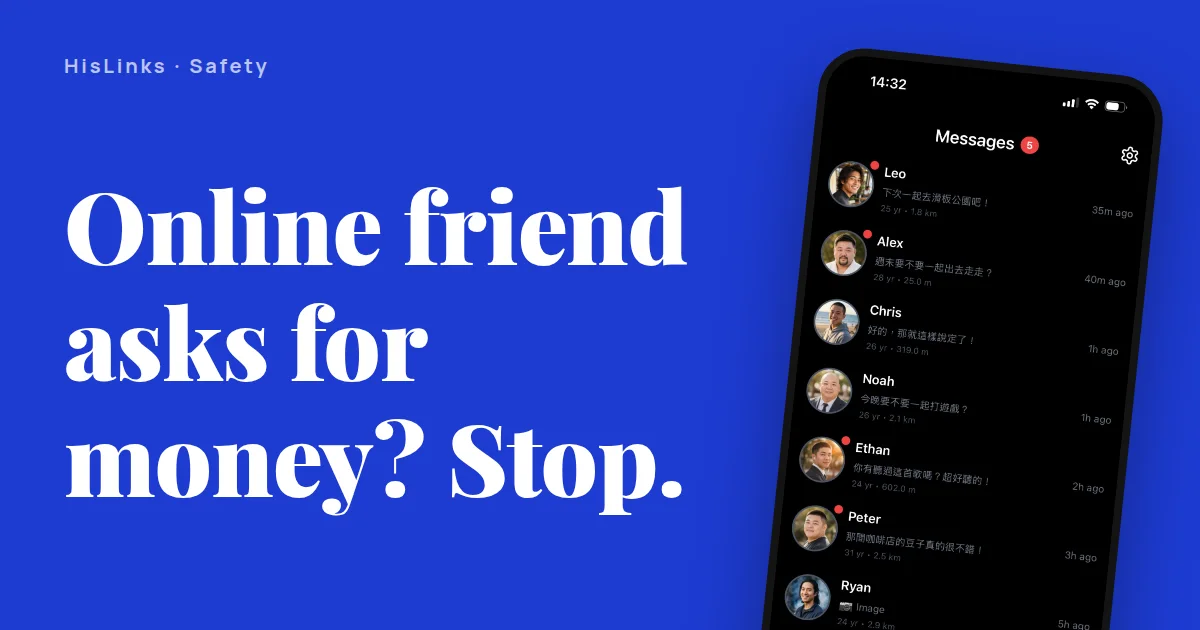
There are four common kinds of gay dating scams: pitching investments once you've gotten close, luring you into a nude video call and then blackmailing you, opening fake accounts with stolen photos, and threatening to out you. What they share is that they build affection or trust first, then ask for money. If you remember "when someone you met online talks about money, stop," you can avoid most of these traps early.
What are the common scams in gay dating?
The tactics look different, but the core is the same: first get you emotionally invested, then create a reason you feel you have to pay.
Scammers target gay dating partly because many people aren't out and don't want those around them to know, so when threatened they are even less likely to ask for help. Knowing the tactics isn't meant to make you suspect everyone. It is so you can recognize them at the critical moment. Here are the most common:
- Fake dating, real investment pitch: after a few weeks of chatting, they start sharing how they make money on some platform.
- Nude video call blackmail: they lure you into a video call or into sending intimate photos, then demand money with the footage.
- Fake accounts with stolen photos: someone uses another person's photos and identity to chat with you, and the person behind it could be anyone.
- Threats to out you: knowing you're not out, they blackmail you with "I'll tell your family and coworkers."
- Urgent loan requests: before you've even met, there's a sick relative, a frozen bank account or a need for fare money.
Is it a scam if they talk about investing after a little chat?
Yes. When someone you met online brings up investing or offers to help you make money, you can treat it as a scam almost right away.
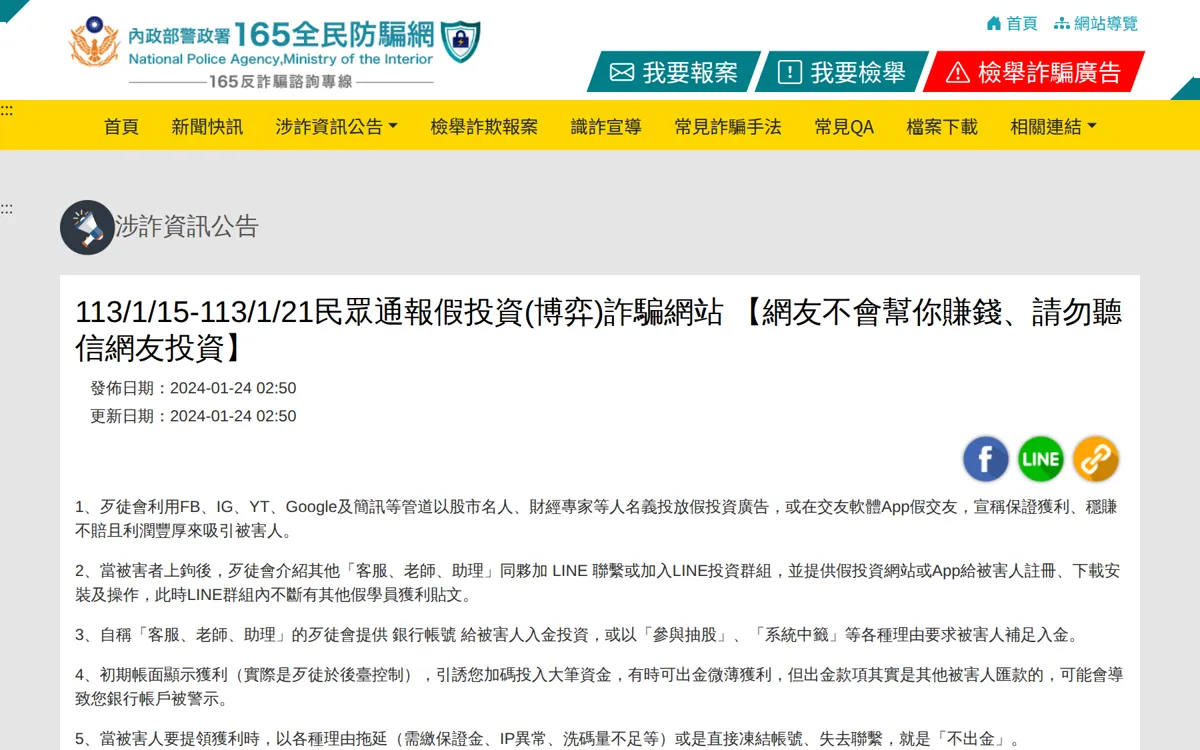
Taiwan's Criminal Investigation Bureau has warned many times that fake-dating investment scams are often tied to online dating: they first meet you with photos of attractive people or a message out of the blue, then move the conversation to LINE and mention how much they've made investing. A common pattern is to let you put in a small amount and even withdraw it for real. After you put in more, they block withdrawals with "deposit" or "tax" demands, and in the end the platform disappears.
Watch for these signs:
- They stress guaranteed profit and no risk.
- They ask you to download an app that isn't in an official store, or to buy cryptocurrency and send it to a specified platform.
- They keep pushing you to put in more, saying you'll miss your chance.
- You've never met, yet they quickly say they love you and plan your future together.
When you're unsure, in Taiwan you can call the 165 anti-fraud hotline, or look up suspicious sites and accounts on the 165 anti-fraud website. Outside Taiwan, contact your local police or LGBTQ+ support organization.
What if you face nude video call blackmail or threats to out you?
Don't pay yet, and don't delete anything. Paying usually only brings the next demand.
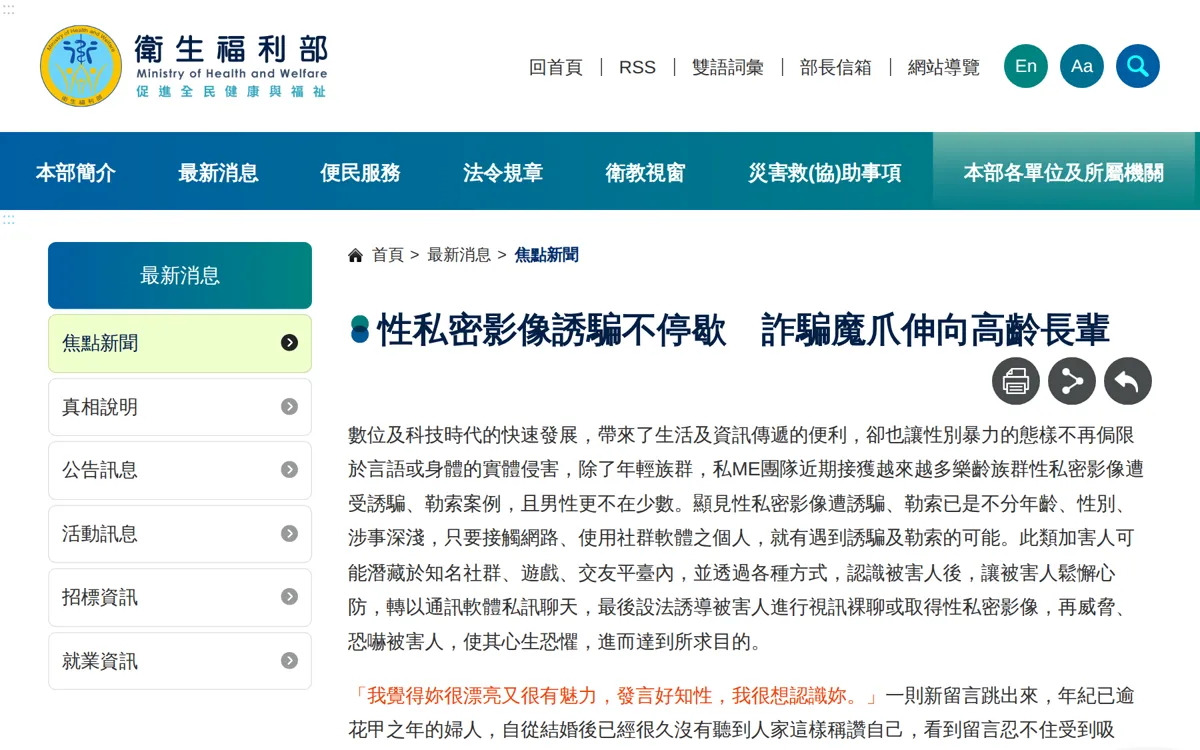
A common pattern is that the other person guides you to undress on a video call, or sends their own photos to get yours, then immediately sends you screenshots of you and says that if you don't pay, they will send them to your family or coworkers, or announce on social media that you're gay. It's easy to panic here, but you can follow this order:
- Stop answering their demands, and don't transfer money.
- Take screenshots of the conversation, their account, transfer details and other evidence.
- Report and block them on the platform.
- In Taiwan, call 165 or 110 to report it. If images have already been spread, you can file a complaint with the Ministry of Health and Welfare's "SiME" team and ask them to help get the images taken down.
Being blackmailed is not your fault. The fault is with the person using your privacy to demand money.
In Taiwan, after the Criminal Code was amended in 2023, spreading someone's sexual images without consent is explicitly punishable. For how to actually file a case and which rights you can claim, we suggest consulting a lawyer or the help services above.
How do you recognize fake accounts and stolen photos?
If the photos are too perfect, the profile has too little information, and the person is in a hurry to take you off the app, take a second look.
Fake accounts often use photos of influencers and models, or everyday photos grabbed from other people's social media. You can use a reverse image search to see whether the same photo appears under other names. You can also ask the person for a few minutes of video, or a photo with a specific hand gesture. A real person usually doesn't mind, and if they keep putting it off, be cautious.
Also, a person in a hurry to switch you to another messaging app is a signal. Once you've moved, the original platform's reporting and blocking no longer work. The HisLinks Community Guidelines ban creating fake accounts and impersonating others, and also ban promoting products or sending scam links in the app. If you run into this you can report it directly. Details are in the Community Guidelines.
If you've been scammed or blackmailed, where can you get help in Taiwan?
You don't have to carry it alone. The services below exist for exactly these moments.
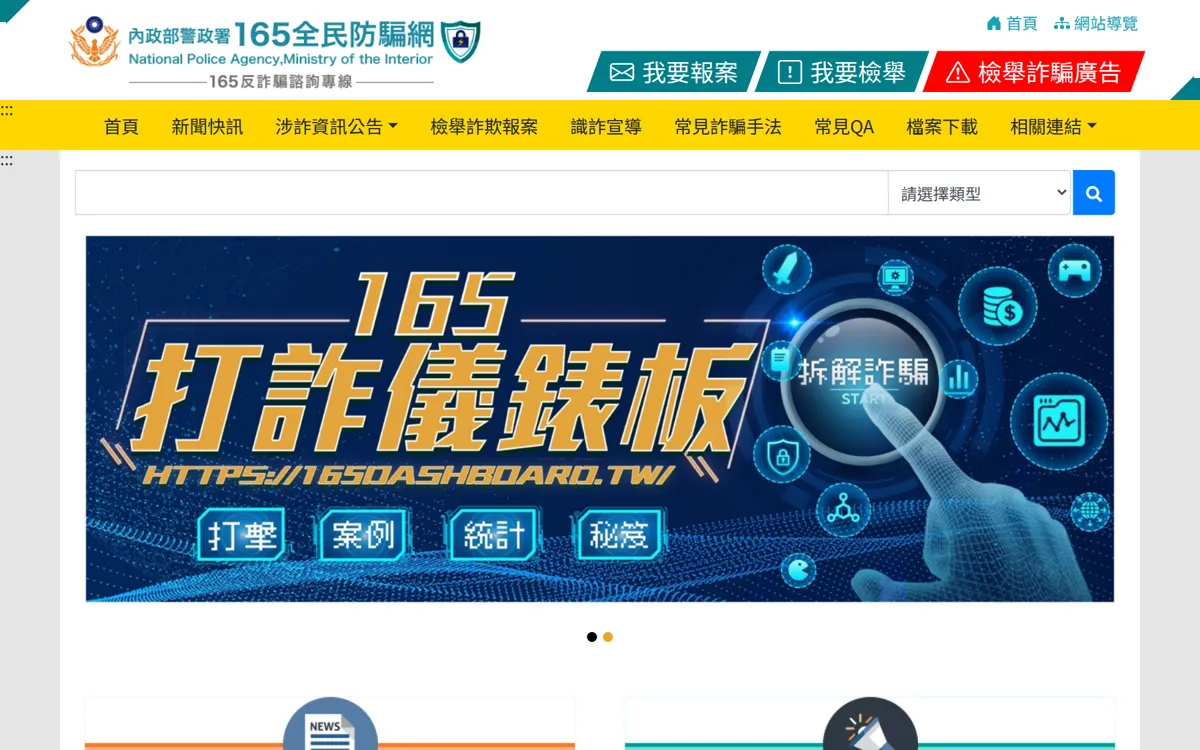
- 165 anti-fraud hotline: verify suspicious investments or accounts, or report a scam. If someone on the phone tells you not to hang up and to call 165 straight from that call, that is a scam. Hang up first, then dial yourself.
- 110: report blackmail, threats, or any concern for your personal safety.
- Ministry of Health and Welfare "SiME" team: if an adult's sexual intimate images are spread, you can file a complaint and ask for help getting them taken down.
- Taiwan Tongzhi (LGBTQ+) Hotline Association: hotline 02-2392-1970, answered Monday, Thursday, Friday, Saturday and Sunday from 7 p.m. to 10 p.m.
- 1925 hotline: call when you feel very low and need someone to listen, free and open 24 hours.
These are all services in Taiwan. Outside Taiwan, contact your local police or LGBTQ+ support organization.
To prevent problems first, see the checklist for meeting someone from the internet and the guide to photo privacy on dating apps. HisLinks safety settings are collected on the safety page.
Frequently asked questions
If I'm blackmailed over a nude video call, will paying solve it?
Usually not. After you pay, the other person often finds another reason to ask for more. A better approach is to stop replying, keep the evidence, then report to the police and file a complaint.
If someone online says they'll take me investing, is it definitely a scam?
The headline of the Criminal Investigation Bureau's warning is very direct: "Be careful dating online: if they add you on LINE and talk investing, it's a scam." If you really are interested in managing money, find a legitimate financial institution yourself, and don't go through someone you met online.
I'm not out. Will going to the police expose me?
This is why many people don't dare ask for help. You can consider first calling the LGBTQ+ hotline or 165 to learn the process, ask what you need to, and then decide your next step, so you don't have to carry all the worry alone from the start.
Sources
- Criminal Investigation Bureau, National Police Agency (Taiwan): Be careful dating online, adding LINE to talk investing is a scam (Chinese-language page)
- 165 anti-fraud website: People you meet online won't help you make money, don't trust online investment advice (Chinese-language page)
- Ministry of the Interior (Taiwan): Dialing 165 during a call? Beware of scam groups impersonating police (Chinese-language page)
- Ministry of Health and Welfare (Taiwan): sexual intimate image luring never stops (SiME team and complaint service)
- Taipei laws database: Criminal Code of the Republic of China, amendment of February 8, 2023 (Articles 319-1 to 319-3)
- Taiwan Tongzhi (LGBTQ+) Hotline Association
- Ministry of Health and Welfare (Taiwan): about the 1925 hotline