HisLinks
What Do Bear, Otter and Wolf Mean? Gay Body Type Labels Explained
What do bear, otter and wolf mean? These are labels gay men use for body type and vibe: bear usually means big and hairy, otter slimmer, wolf lean and hairy. Here is what each means and where they come from.
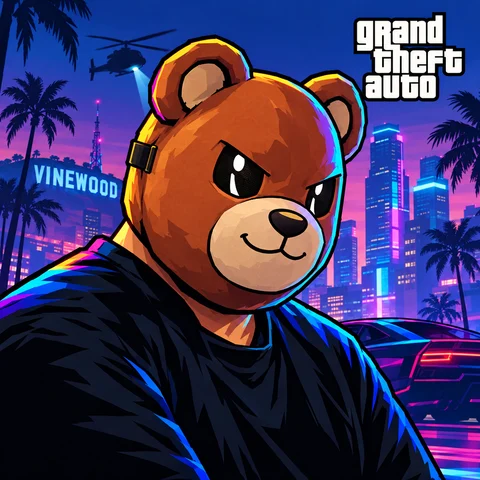
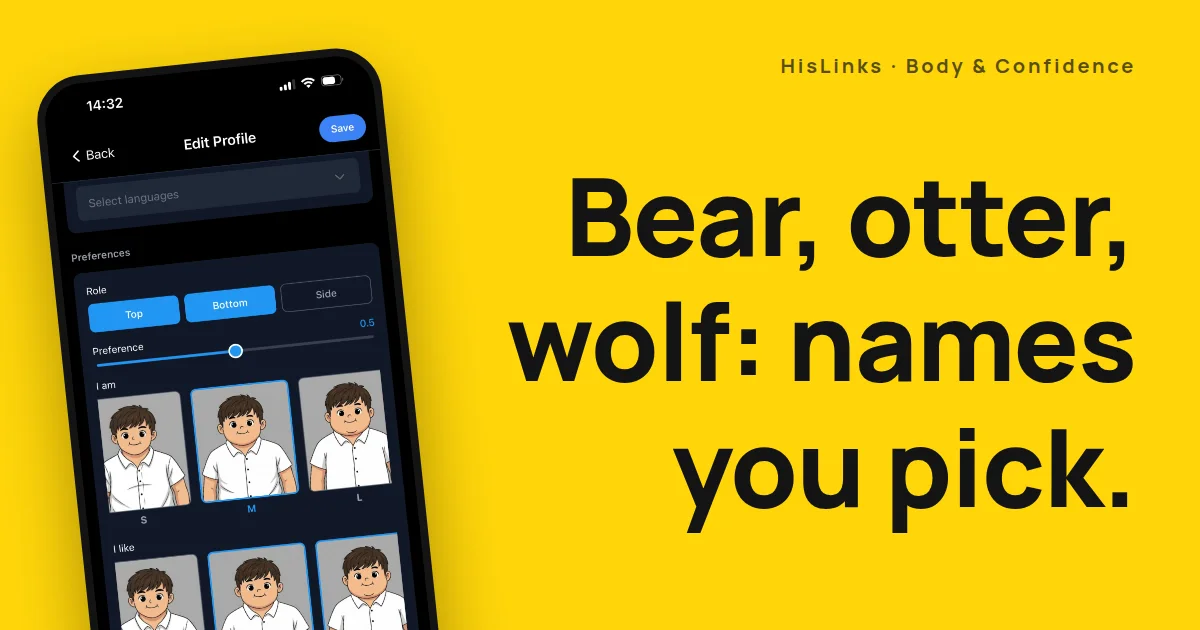
Bear, otter and wolf are labels gay men use to describe body type and vibe. A bear is usually a big, stocky man with plenty of body hair. An otter is slimmer than a bear. A wolf is usually lean and muscular, also with body hair. These words have no official definition. They are shared language in the community, and a way of identifying yourself.
What does "bear" mean in the gay community?
A bear is a gay man with a larger build, more body hair and a more obviously masculine look. The Chinese Wikipedia entry on bear culture describes it this way, and Lin Chun-Te, a scholar who studied Taiwanese bears, notes in his thesis that in gay culture worldwide, "bear" mainly means a hairy, heavyset gay man.
There are many subtypes under bear. Common ones include:
- Muscle bear: a bear with muscle, solid.
- Chubby bear: a bear with more softness and less visible muscle.
- Cub and big bear: mostly about age or size.
- Hairy bear: a bear with especially a lot of body hair.
None of these has a standard answer. The same man might be a muscle bear to one person and a chubby bear to another. In the end it comes down to how you identify. If you are a bear or like bears, take a look at our bear dating page.
Where did bear culture come from?
According to Chinese Wikipedia, bear culture took shape in the United States in the 1980s, partly as a reaction to the body standards of the mainstream gay scene. The timeline from English Wikipedia goes roughly like this:
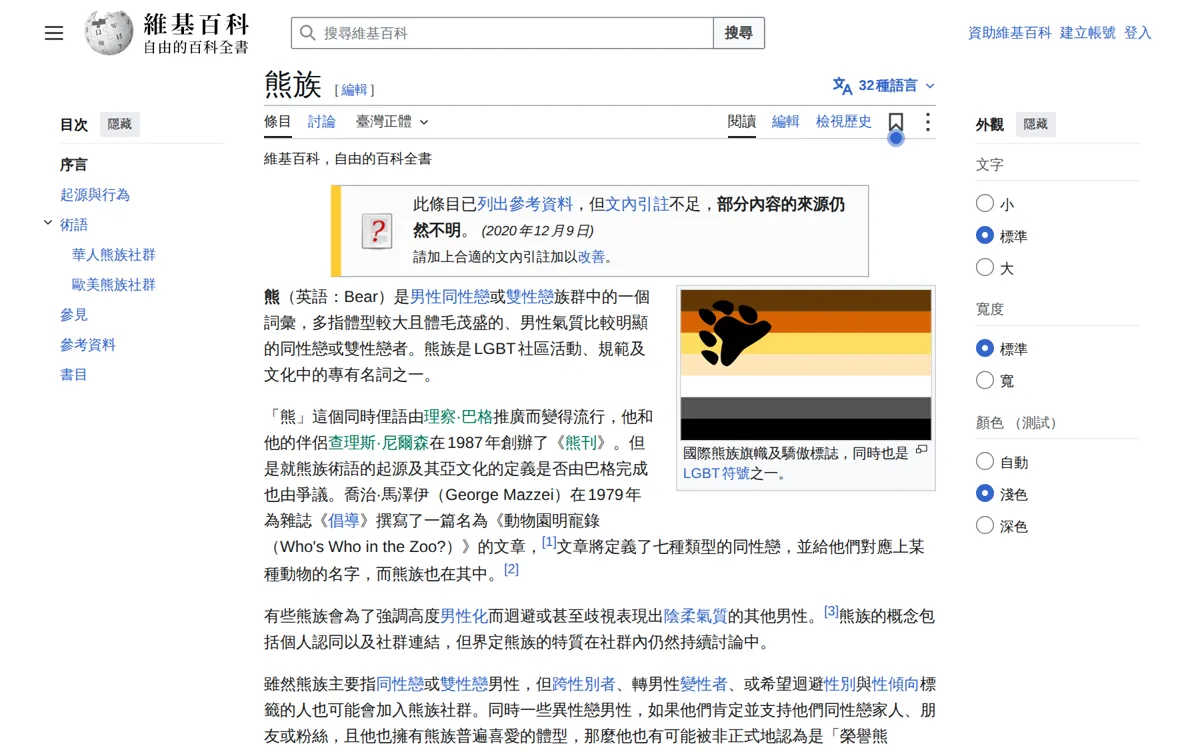
- In 1979, George Mazzei published "Who's Who in the Zoo?" in The Advocate, using animals to describe different types of gay men, bears among them.
- In the mid-1980s, a group of gay men in the San Francisco Bay Area who called themselves "bears" began to meet, and also connected on the early internet.
- In 1987, Richard Bulger and his partner at the time, Chris Nelson, founded Bear Magazine, which is generally credited with making the term more widespread. Wikipedia also notes that the credit is still disputed.
- In 1995, Craig Byrnes designed the International Bear Flag, which became the pride flag of the bear community.
In other words, the bear label carried a meaning from the start: not only lean, hairless bodies deserve to be liked. That is why many people are still glad to call themselves bears today.
What about otter, wolf and the rest?
These terms are mostly defined in relation to bears. Chinese Wikipedia notes that terms like "monkey" and "baboon" only make sense within bear culture.
Common meanings of each label:
- Monkey (猴, the Chinese slang that corresponds to otter): a slimmer guy, defined in relation to bears.
- Baboon (Chinese slang): some flesh on him, but not yet chubby.
- Wolf: English Wikipedia defines it as a gay man with body hair and a lean, muscular build.
- Otter: a hairy but slim guy. Some treat it as a branch of bear.
- Cub: a younger bear, or one who looks younger.
These words describe, they don't score. Being slim isn't a flaw, and neither is having some weight. A label just helps people get a quicker idea of what you're like.
How are "pig," "fit" and "city" used?
These words depend more on context. A label isn't good or bad in itself, but the same word can feel completely different when you say it about yourself and when someone says it about you.
Pig
Chinese Wikipedia lists "pig" (豬) as a term for a very heavy man, and notes that it is derogatory, so it hurts easily when used on someone else. To describe a bigger guy, "chubby bear," "stocky" or just saying he has some weight is usually safer. The English-language counterpart is "chub," which English Wikipedia describes as its own subculture, with people who specifically appreciate that body type.
Fit and city
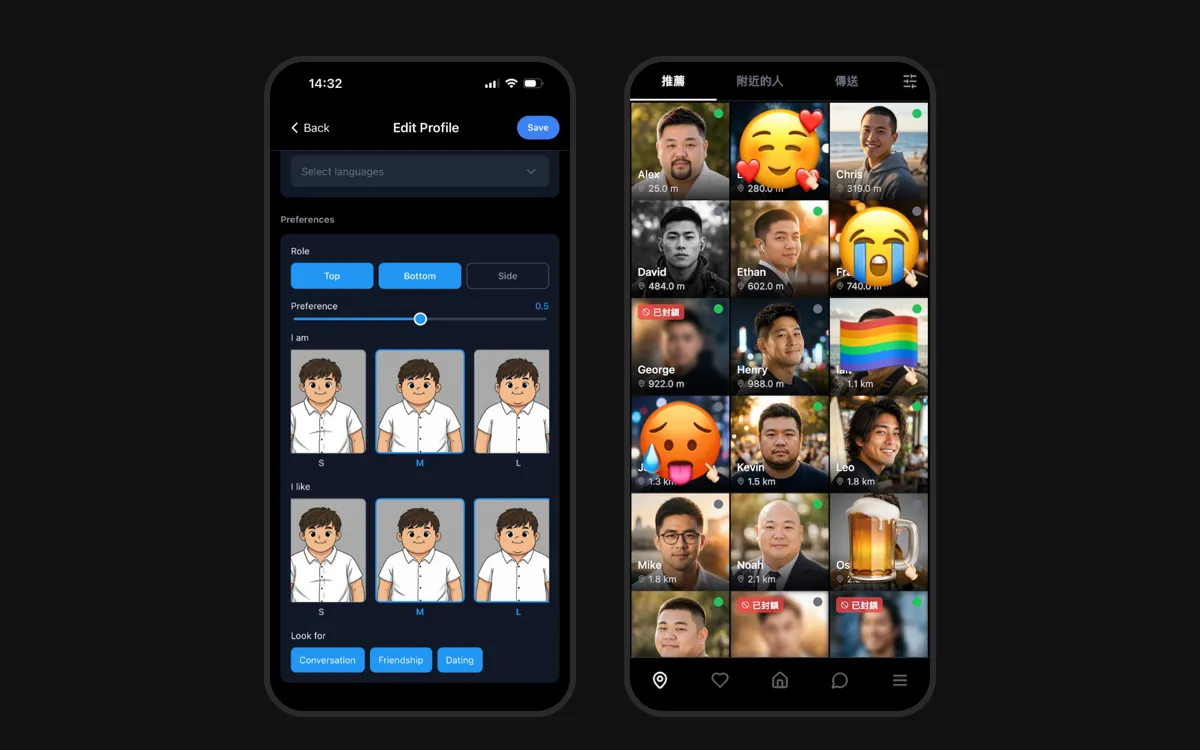
Words like "fit" (精壯) and "city" (都會) are closer to everyday description, with no agreed definition or origin. "Fit" usually means a solid, defined build that isn't extreme. "City" is more of a style, someone whose clothes and look feel urban. In HisLinks, body type and style are tags you choose yourself. You can tag both, and pick whatever feels most like you.
Why are these labels identity and not mockery?
Because what a label means depends on who is using it and for what. Bear culture began as a way for people who didn't fit the mainstream body standard to find a name for themselves and find each other.
Used well, a label helps you find your people faster, and makes it easier for people who like your look to see you. Used badly, it becomes a tool for shutting others out. Lin Chun-Te's thesis on Taiwanese bears, "Becoming a Bear," is about exactly this: how Taiwanese gay men become bears and build identity through the body.
Labels are for finding each other, not for ranking each other.
So pick the label you identify with, and don't force yourself into a box someone else gave you. In gay dating, a label is only a first impression. What makes people want to keep talking is still you. If these comparisons often wear you out, read Where does body image anxiety come from for gay men. To see how to put labels into a dating profile, check How to write a dating profile bio.
Frequently asked questions
Does a bear have to be heavy?
Not necessarily. Bear covers many types, such as muscle bear, chubby bear and hairy bear. What they share is more like a bigger build, body hair and an obvious masculine look. In the end it's up to whether you identify with it.
If someone calls me an otter, are they saying I'm too thin?
Otter just describes a slimmer build, usually in relation to bears. It describes, it doesn't score, and every body type has people who appreciate it.
I don't know which type I am. What should I do?
No need to rush. You can pick the one or two closest labels, or just write a concrete description of your height and build, and adjust later when a word feels more like you.